

…and what that teaches us about innovation.
The sole of reinvention
From basketball courts and punk gigs to fashion catwalks, Converse Chuck Taylor All Stars have walked a remarkable path. They started as functional sports shoes designed for performance. Over the decades, they’ve become a symbol of rebellion, self-expression, and timeless cool.
But it didn’t start that way.
Converse began life in 1908 as a rubber company in Massachusetts, making galoshes, winter boots and even tyres. In 1917, they launched a canvas basketball shoe – the All Star. Two years later, a semi-pro basketball player named Chuck Taylor walked into their office complaining about sore feet… and walked out with a job.
Chuck became the shoe’s first ambassador, promoting it at basketball clinics around the United States. His signature was added to the ankle patch in 1932. And with that, a legend was born.
At Alive with Ideas, we love stories like these. They show how creativity and innovation aren’t always about tech revolutions or billion-dollar R&D. Sometimes, they’re about listening, shifting, and letting your audience lead. And while Converse didn’t use our A.L.I.V.E. framework and methodology, their story can be told through it…
ASK: What are we really selling?
By the 1970s, Chucks were no longer at the top of the sports performance charts. Brands like Nike and Adidas were pushing innovation in sports tech. Converse faced a tough question:
If we’re not the best sports shoe anymore… what are we?
The answer didn’t come from the lab. It came from the street.
They began observing how people wore Chucks off the court: musicians, skaters, punks, artists. The shoe had become a canvas for personal identity. Converse wasn’t just selling footwear. It was selling cultural credibility.
LEARN: Follow the fans
Instead of clinging to their original market, Converse leaned into what they were seeing. They studied the places and scenes where Chucks were showing up – at underground music venues, indie fashion circles, and college campuses.
This was a big mindset shift. The product hadn’t changed much, but its meaning had. And that meaning was being defined by the wearers, not the makers.
IMAGINE: What if we celebrated individuality instead of sport?
What followed was a bold shift. Converse campaigns moved away from athleticism and focused on creativity, nonconformity, and youth identity. Ads featured unknown bands and local artists instead of pro athletes.
They embraced limited editions, collaborations, and DIY aesthetics. Customisation became part of the product experience. The message was clear: don’t just wear Chucks. Make them yours.
VERIFY: Does this resonate?
Converse stayed close to culture. They tested partnerships with musicians, dropped artist-designed collections, and explored niche subcultures. When something landed, they amplified it. When it didn’t, they learned and moved on.
Their connection with creative communities became a kind of constant prototyping. They asked: is this true to our audience? Is it relevant right now?
EXECUTE: Stay classic, stay current
Chucks haven’t changed much in design. But in the message, they evolve constantly. That’s the secret sauce. Converse stays recognisable without being static.
The brand keeps launching new cultural campaigns, artist collabs, and limited runs that feel fresh but are always grounded in the same classic silhouette. Through it all, Converse has remained about you, the consumer. Your voice. Your look. Your choice.
 What can we learn from this?
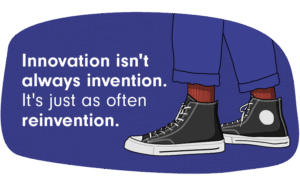
Innovation isn’t always invention. It’s just as often reinvention. Converse didn’t try to out-tech Nike. Instead, they redefined their value by listening to the people who loved them. They let users lead the brand story.
So next time you’re tempted to start with the solution, maybe take a step back.
Ask what matters. Learn what’s changing. Imagine something different. Verify it with real people. Execute with purpose.
Sound familiar? That’s the A.L.I.V.E. way.
Inspired to think differently?
Let’s talk. Whether you’re a brand with history or a team with bold ambitions, our A.L.I.V.E. framework is a space to explore new stories, ideas and possibilities.