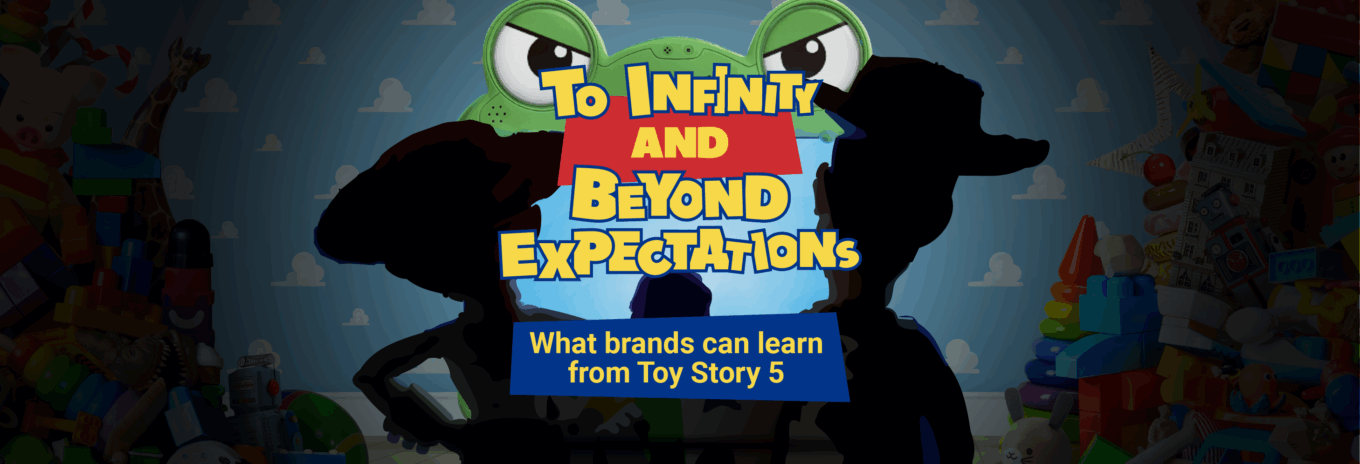
What can Toy Story 5 teach brands about creativity, constraints and reinvention?
When Pixar announced Toy Story 5 some people were excited to see Woody, Buzz and the gang return to the big screen, but others questioned whether another sequel was really necessary. After all, haven’t we already said “so long partner” to these characters several times?
But perhaps that’s the wrong question.
Instead of asking whether the world needs another Toy Story film, marketers should be asking something far more interesting: 
How does a creative idea stay relevant for more than 30 years?
In an industry obsessed with the next big thing, Toy Story offers an important reminder that, the greatest creative challenge is finding a fresh way to tell a familiar story.
And that is a challenge every brand can relate to.
The myth of constant reinvention
Marketing often chases emerging platforms, new technologies and cultural trends. We talk about innovation as if success only comes from starting with a blank sheet of paper.
But the reality is very different.
Most successful brands aren’t reinventing themselves from scratch every few years. They’re evolving, adapting and finding new ways to make their core proposition relevant to changing audiences.
That’s exactly what Pixar has been doing since Toy Story first appeared in cinemas in 1995.
The characters remain familiar. The emotional heart remains intact. Yet each film reflects the concerns, relationships and cultural moments of its time through Andy’s (and then Bonnie’s) childhood.
But the challenge is making people care about the story again.
Toy Story 5 sees Woody and the gang facing their biggest challenge yet, competing with Lillypad, a tablet that’s captured Bonnie’s attention. Pixar is tackling a problem that didn’t exist when the original film launched. The question is no longer whether toys can survive growing up – it’s whether they can remain relevant in the digital age. That’s creative reinvention.
 Creativity can thrive within constraints
Many people assume creativity requires complete freedom.
In reality, some of the most creative work emerges from constraints.
Think about the challenge facing the Toy Story team – they can’t simply change everything. Audiences expect certain characters, themes and emotional beats. There is a legacy to protect and decades of audience affection to respect. An audience who grew up with Andy and are now watching Bonnie’s childhood with their own children.
Yet the film still needs to feel surprising.
Brands face exactly the same challenge every day.
Marketing teams work within established brand guidelines, customer expectations, budgets and commercial objectives. They’re expected to create something fresh while staying recognisably themselves.
That’s not a limitation on creativity. It’s where creativity happens. Anyone can have an idea when there are no rules.
The real test is creating something meaningful when the boundaries already exist.
 Nostalgia isn’t a creative strategy
One of the biggest risks surrounding any sequel is relying too heavily on nostalgia.
Nostalgia is powerful. It creates emotional connections. It reminds people of who they were and where they were when they first encountered a brand, product or story.
But nostalgia alone isn’t enough.
People might buy a ticket because they remember Toy Story. They won’t recommend the film because they remember Toy Story.
The same principle applies to brands.
We’ve seen countless examples of businesses reviving old logos, relaunching classic products or referencing their heritage in campaigns. The most successful examples, from Barbie’s cultural resurgence to LEGO’s transformation from toy brand to entertainment powerhouse, don’t simply revisit the past – they use it as a foundation for something new. That’s because nostalgia can grab attention, but creativity is what keeps people engaged.
The real lesson for marketers
Whether Toy Story 5 becomes a blockbuster success or a flop, its existence highlights an important truth about creativity – the most enduring ideas are the ones that continue evolving.
For marketers, that means resisting the temptation to abandon good ideas too quickly. It means recognising the value of established brand assets, customer trust and familiar stories.
Sometimes the answer is asking a better question:
How can we make this idea matter again?
Sometimes creativity is about discovering a new chapter in a story that’s still worth telling.
And if Pixar can find a way to keep audiences engaged with a toy cowboy and a space ranger after three decades, perhaps there’s a lesson there for every brand trying to stay relevant in an increasingly crowded world.
You’ve got a friend in us
If your brand feels stuck within the boundaries of what it’s always done, we can help. Great creativity doesn’t come from ignoring constraints, it comes from using them creatively.
Let’s write the next chapter for your brand together. Get in touch and let’s help your brand reach for the sky.