
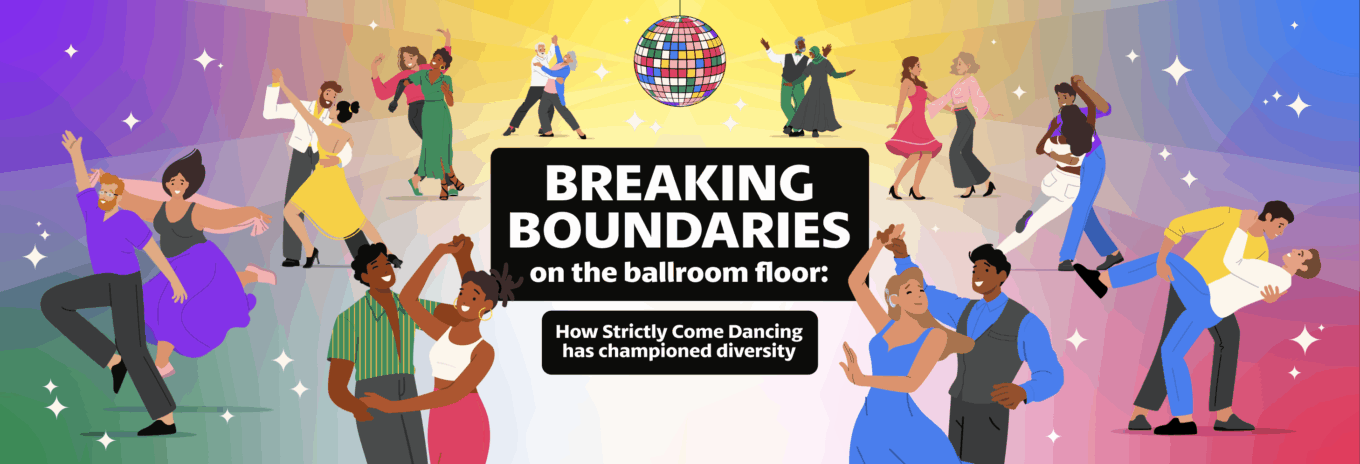
Since waltzing onto our screens in 2004, Strictly Come Dancing has dazzled us with glitter, gowns and gasp-worthy lifts. But behind the sparkle, the show has quietly built a reputation for doing something far more meaningful: pushing the boundaries of representation on primetime TV.

A show that’s grown with its audience
Like much of British television in the early 2000s, Strictly began with a relatively narrow view of who appeared on screen and whose stories were told. Over time, that picture has shifted as the show has grown alongside its audience.
Today, the ballroom regularly features celebrities and professional dancers from a wide range of cultural, ethnic and global backgrounds. The result is a show that feels more representative, more contemporary, and more in tune with modern Britain.
Representation that resonates
Strictly’s most memorable performances aren’t memorable because they come from “diverse” dancers – they’re memorable because they’re brilliant. Winners like Ore Oduba, alongside professionals such as Oti Mabuse and Nancy Xu, have helped reshape expectations of who leads, who excels and who gets to own the dance floor.
Different cultural influences, movement styles and musical interpretations have enriched the show without needing explanation or justification. They belong there, and the audience has embraced that.
Inclusion without caveats
Strictly’s commitment to inclusion isn’t limited to ethnicity. The show has welcomed differently-abled contestants, LGBTQ+ dancers and performers of all ages showcasing ability, identity and individuality in ways that feel genuinely ground-breaking.
The same is true of the show’s approach to disability, age and identity. Contestants such as Rose Ayling-Ellis and Chris McCausland weren’t framed as inspirational exceptions, but as competitors – capable, ambitious and deserving of the same creative risks as anyone else. Rose’s silent moment mid-routine and Chris’s 2024 win weren’t powerful because they were “about” disability, but because they briefly invited audiences to experience the dance from their point of view, creating moments of connection and trust between performer, partner and viewer.
Likewise, John Whaite and Johannes Radebe’s 2021 win as the first all-male pairing felt like a natural progression for a show that understands that partnership, connection and storytelling aren’t defined by gender. And when contestants like Bill Bailey and Angela Rippon take to the floor, age isn’t treated as a limitation, it’s simply another part of who they are.
A global dance floor
From Bollywood flair to Afrobeat energy, Strictly has embraced cultural cross-pollination with open arms. These influences make great TV, spark curiosity, celebrate heritage and show how effortlessly dance can cut across cultures.
Looking ahead
As the show continues to evolve, its greatest strength may be that diversity no longer needs announcing. It’s present in the casting, the choreography, the judging and the stories – as the norm.
The ballroom is a competition space that is reflective of how inclusive environments work best: when everyone is there on equal footing, free to be excellent without explanation.
Thinking about following in Strictly’s footsteps and improve the diversity of your brand? Ping us an email, we’d love to help.