The human x AI sweet spot: the Alive angle
AI has been shaking up the comms world for a while now. First with curiosity. Then with concern. And now, with capability. The conversation has shifted from “Should we use it?” to “How do we use it well?”
For us, that “well” is everything.
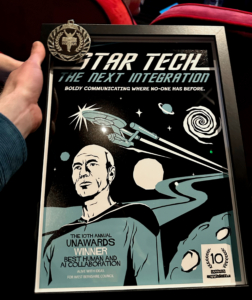 Our recent work with West Berkshire Council – which went on to win Best AI & Human Collaboration at the Comms2Point0 10th Annual UnAwards in its debut year as a brand new category – showed exactly what happens when AI is integrated thoughtfully, ethically and creatively into a comms process, rather than bolted onto the end as a novelty.
This wasn’t automation or outsourcing – this was a partnership.
A fusion of human judgment and AI-scale analysis that made the work deeper, sharper and faster without sacrificing the nuance that makes comms human in the first place.
AI as an accelerator, not author
The West Berkshire brand audit was big. Hundreds of pages of documents, workshop transcripts, tone-of-voice examples, in-person site visits to museums, libraries and family hubs, taking signage photos, reading research reports and web copy. Normally, processing this kind of volume demands either a lot of time or a lot of people.
AI changed that dynamic – not by doing the thinking, but by clearing the fog around it.
It helped structure sprawling inputs, surface recurring themes, spot contradictions and cross-reference at a speed no team could ever match.
But the insight, the narrative, and the recommendations came from people.
AI did the groundwork. Humans made the meaning.
Scale without losing substance
 Across four months, the human x AI partnership led to:
- 600+ pages of material analysed
- 80+ files reviewed and interpreted
- 120,000+ words co-developed across reports and decks
- A comprehensive 110+ page brand audit
- A set of clear, evidence-based recommendations
- A strategic and creative framework built for real-world delivery
The real win wasn’t the speed, but the bandwidth and the ability to think bigger because the team wasn’t drowning in data. AI didn’t make the work lighter in meaning, only lighter in load.
Ethics, oversight and the human non-negotiables
AI can analyse, synthesise, and draft. But AI cannot understand the emotional temperature of a place. It cannot read the room or sense internal politics, lived experience, organisational culture, or community nuance.
That’s why every insight was checked, every interpretation re-authored, every recommendation debated by the team.
AI gave volume. Humans gave voice. And that tension, held carefully and consciously, is what made the work robust.
What the project proved
The West Berkshire audit wasn’t only a brand exercise – it was proof of a new model for public sector comms. One that is:
- Faster without cutting corners.
- Deeper, because AI can handle breadth while humans focus on nuance.
- Fairer because more voices, perspectives and data points can be included and understood.
- More collaborative not just between people, but between disciplines, tools and ways of thinking.
It showed that AI is most powerful not when it replaces part of the process, but when it expands it – stretching what’s possible for small teams with big expectations.
And just for a little extra pizzazz… here’s what the UnAwards Judges had to say about our project:
“A great example of Human x AI collaboration at scale. It stood out for its intelligent use of AI in a brand refresh, bringing together insights from documents and interview transcripts for a clear and rounded view of how the organisation is perceived. It has the potential to shape how others think about brand work.”
So… where is AI in comms heading next?
The hype has passed. The panic is fading. What’s left is the practical middle ground:
human creativity amplified by AI capability.
AI won’t replace comms professionals, but comms professionals who know how to work fluently with AI will redefine what’s deliverable. Bigger insights, clearer narratives, smarter strategy, and more time for the human stuff – tone, story, judgement, empathy.
If the first half of this decade was about understanding AI’s risks, the second half will be about unlocking its potential.
And after the West Berkshire project – and that lovely bit of UnAwards sparkle – we’re more convinced than ever that the future of comms isn’t AI or humans.
It’s AI with humans. And the teams who learn to collaborate will be the ones shaping what comes next.