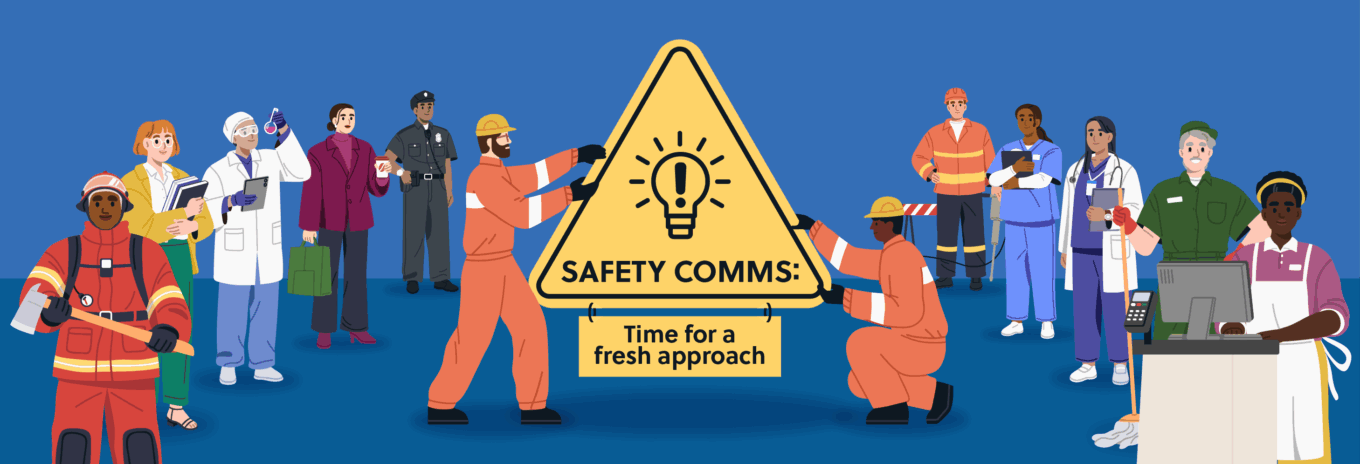
Let’s be clear, there’s a lot of great work already being done in safety communications. We recognise that dedicated teams deliver campaigns that genuinely enhance understanding and minimise harm. Those teams are helping employees work safely and get home safely.
That deserves recognition and celebration.
Like every area of workplace culture, safety communications must continue to evolve. New risks, new ways of working, and new expectations from employees demand more from the messages we share, and the way we share them.
The problem: are we missing the mark?
In some instances, safety campaigns fall into familiar patterns:
- Compliance-first messaging that ticks the box but doesn’t drive behaviour.
- One-size-fits-all approaches often overlook the nuances of a diverse workforce.
And while the content might be well-meaning, the execution can sometimes feel tired or disconnected. People switch off not because they don’t care, but because the message doesn’t land.
The challenge isn’t just getting information across. It’s making it resonate, stick, and spark action.
The opportunity: make safety human, memorable and shared
Safety comms aren’t just about broadcasting instructions. At their best, they shape culture and build shared responsibility.
The goal is safety comms that reduce accidents whilst reinforcing the identity of your organisation.
To do that, they need to:
Connect. Involve. Stick.
- Connect: Move beyond rules to something more human. Storytelling, tone, and visual design should help people see themselves and each other in the message.
- Involve: Co-created campaigns are more relevant and more powerful. They reflect lived experience, not just top-down priorities.
- Stick: A clear, creative identity helps safety messages stay front of mind and span multiple formats: digital, print, and face-to-face.
Ask yourself: Are we sparking a reaction or just sharing information? Are we meeting people where they are in terms of language, literacy, and lived experience?
What good looks like
 Strong safety campaigns align with organisational values and speak to what really matters. They’re not just about avoiding incidents. They’re about building understanding, accountability, and care.
Consider this shift in messaging:
“Hi-vis must be worn at all times.”
vs.
“Stay visible. Stay safe.”
We know that PPE is a last line of defence, and most organisations have already built strong awareness around it. But this example shows how even familiar guidance can be reframed to feel more personal and impactful.
Great campaigns go further:
- They showcase stories from real colleagues.
- They take bold creative and visual approaches.
- They invite people to think, reflect, and talk.
- They extend beyond comms channels to shape everyday decisions.
Campaigns that are remembered extend beyond a video, or an email campaign. They are ideas and bold messages that will be referenced across digital assets, print, and face-to-face conversations. And importantly, they include everyone by design.
Alive steps up to the challenge…
At Alive, we help organisations shift the culture around safety through creative communications.
We’re not safety experts. We’re engagement experts. And that means we bring fresh thinking and behavioural insight to longstanding challenges.
We can help you:
- Develop campaign ideas that feel authentic to your people.
- Create assets that live well across every comms channel.
- Plan activations that drive understanding and ownership.
Our approach is inclusive, agile, and grounded in what makes messages land.
The bigger picture
Safety isn’t static. It’s shaped by how people feel, how teams behave, and how leaders take charge. That means safety comms needs to be both instructional and inspirational.
So here’s a question to take away: Are your safety campaigns designed to drive behaviour, or to check a box?
Let’s create comms that keep people safe.
Whether you’ve got a specific issue to solve or just a feeling that it’s time for something new, we’d love to help. A safer future starts with smarter communication.
Need support? Get in touch. We’ll pop the kettle on.