

Resilience, also known as psychological flexibility, is something we’re hearing about a lot lately.
And for good reason.
 The family, personal and work-related challenges we’re all facing right now require super-human levels of resilience that some of us already possess, yet many of us struggle to find.
We were recently approached by Whittington Health NHS Trust to help them bring to life some rather clever content for a Resilience Workbook.
It got us thinking that this a subject which really should be at the top of our agendas.
What exactly is resilience?
The Oxford Dictionary describes resilience as: The ability of people or things to feel better quickly after something unpleasant, such as shock, injury, etc.
And this article by Psychology Today explains that: Rather than letting difficulties, traumatic events, or failure overcome them and drain their resolve, highly resilient people find a way to change course, emotionally heal, and continue moving toward their goals.
How do we change course?
By taking some time to be a little kinder with ourselves and focusing on our own mental and physical wellbeing we can develop ways to bounce back from challenging moments and experiences.
Here we share five ways to become more emotionally resilient, with thanks to some rather smart individuals…
- Know where you stand – Our ability to be resilient varies over time and circumstance and it can help to clarify where we stand at any given moment. In their Resilience Workbook, Organisational Development Practitioner, Mala Shaunak, highlights the Resilience Capability Index (RCI) developed by Roffey Park. It includes 5 domains that can help you to assess your resilience capabilities – Perspective, Purpose, Values & Strengths, Emotional Intelligence, Physical Energy and Connections. By completing the RCI, you’ll receive an indication of how your resilience capabilities today compare against a group of your peers.
- Be aware of what you are thinking and feeling – Don’t give yourself a hard time for feeling the way you do. Acknowledge and manage those feelings.
“I wholeheartedly believe you can teach yourself to be resilient by learning about your emotions, how they show up in you and what they are telling you about what you need,”
says Executive Coach and Psychologist, Steph Tranter.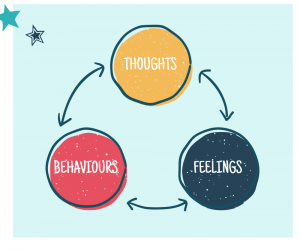 “But we tend to hide from, deny and invalidate our emotions, especially the uncomfortable ones, mainly because no one has ever taught us about them or how to deal with them… If we give people skills to spot, label and manage their emotions better, there would be far less mental health (or as I prefer to call it emotional health) issues in our world.”
The simple act of noticing and acknowledging emotions like worry or stress can help to diffuse the effect of negative emotions because your thoughts, feelings and behaviours are so closely connected. Start by being aware of what you are thinking and feeling and then diffuse (don’t deny) any related uncomfortable emotions.
- Spot faulty thinking patterns – As Steph describes, learning about your emotions and how you manage them is a sure-fire way to help build greater resilience. “Often what stops us being resilient is emotion, particularly stress, anxiety, worry, and frustration. Emotions can hijack our ability to think straight,” she explains.
So, next time you spot yourself feeling negative, pessimistic or cynical… STOP. There’s a chance you’re being hijacked by ‘cognitive distortions’ or faulty thinking patterns. Take ‘should’ statements, for example. They can end up supporting a pessimistic view of life, diminishing our resilience and leading to feelings of anxiety and frustration. Next time you find yourself using a “should,” “ought to” or “must” in your language, try changing it to a “can,” “choose to” or “decide to.”
There are many other classic thinking errors that we can all be prone to, here Psychologist Joan Rosenberg explores five of them and how you can challenge them. - Know your own value – we recently had the pleasure of hearing an incredibly inspiring talk by Dr Ed Coats, Specialist Registrar in Obstetrics & Gynaecology, Polar Explorer and Adventurer. Ed is currently working on the NHS frontline and he drew on his lifetime of experiences to help define what he believes helps us to become more resilient individuals, “It’s a confidence thing,” Ed explained. By learning over time to take a positive view of yourself and have faith in your strengths and abilities you’ll become a more confident and mentally resilient person. “This will give you the ability to challenge others respectfully and bounce back from failures much more quickly and healthily.”
- Use your support network – whether you work in a team or you’re flying solo, there will be times when you need to call on the help, guidance and emotional support of others. And it helps massively if you’ve already got that community of care in place. This TED article explains how to assemble your personal dream team of mentors, know who they are and when each of them will come into their own.
Keeping the muscle strong
Emma Lloyd, Learning Facilitator, Coach, Mentor and TEDx Speaker shares, one of her favourite quotes about resilience by Al Siebert…
“Resiliency is something you do, more than something you have. . .You become highly resilient by continuously learning your best way of being yourself in your circumstance.”
 “This encapsulates for me that resilience is more of a verb than a noun. It is an action – something that we do. To help us build and maintain our resilience I would always encourage bite size daily practices. Think of it as your resilience muscle, with focus and time it will become even stronger.
By being a little bit more conscious a little more of the time, this will help you not only in more challenging times and will support your professional and personal growth too – it allows us to pause, think and be kind to ourselves – you really are doing brilliantly.”