Every year on 1 April, brands get brave.
Suddenly the companies who spend most of the year wordsmithing careful statements and triple-checking tone decide to announce something completely ridiculous.
And honestly, it’s one of our favourite days in comms. Because when it’s done well, April Fools’ shows you exactly how comfortable a brand is in its own skin.
The fake ads we still talk about
Some of the best-known April Fools’ stunts have been bold.
In the 90s, Taco Bell announced it had bought the Liberty Bell and renamed it the “Taco Liberty Bell.” People were furious. Phone lines lit up. Then came the reveal. It was a joke! And a very effective one.
Google made April Fools’ almost a tradition, launching elaborate fake products like “Google Nose” (yes, search by smell) and fully committing to the bit.
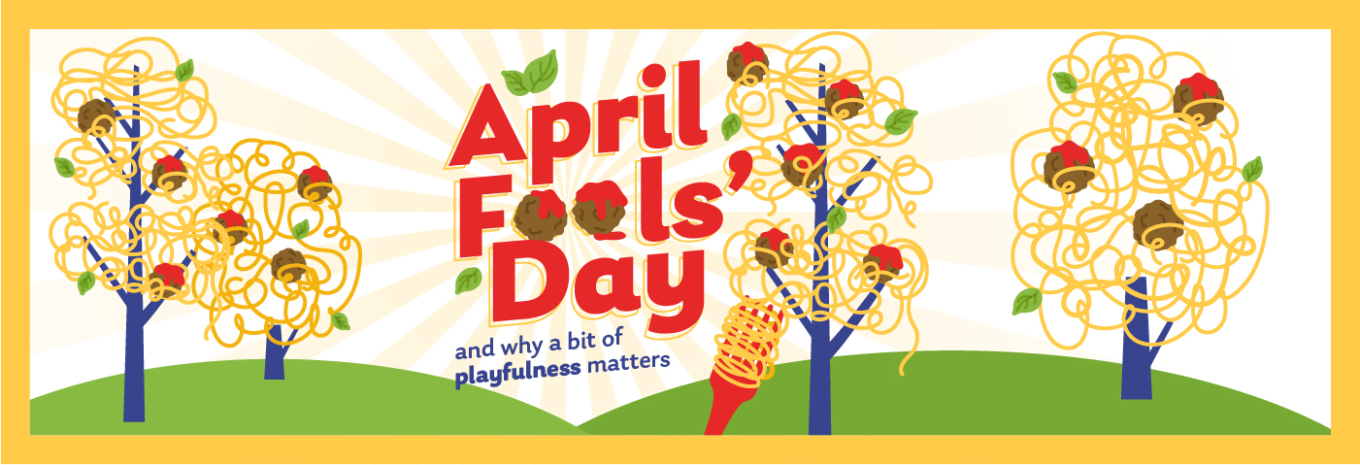
And years ago, the BBC aired a segment about spaghetti growing on trees. Viewers genuinely rang in to ask how they could grow their own.
Some of our other favourites include Oreo flavoured toothpaste, a Duolingo world cruise, an on-the-go sachet of Crème Egg goo, Heinz Dubai beans, and Terry’s Chocolate Mint toothpaste.
No one half-arsed it. They went all in.
Why it works (when it works)
It’s not only about being funny.
A good April Fools’ idea says: “We know who we are, and we know you well enough to play.”
It shows confidence. And confidence is attractive in a brand.
It also creates a shared moment. That little spark of “Wait… is this real?” followed by the reveal – it makes people feel part of something. They’re in on the joke.
And in a world where most messaging is trying very hard to be correct, compliant and careful, something playful stands out and becomes memorable.
But here’s the important bit
You can’t fake fun if trust is wobbly.
If your employees are nervous about restructures, a “surprise announcement” probably won’t feel hilarious.
If your customers are frustrated, a joke about a new feature might land badly.
April Fools’ only works when the relationship is solid. When people know you’re not trying to distract them or spin something – you’re just having a bit of fun.
That’s why some brands can pull it off effortlessly, and others really shouldn’t try.
A small plea for more personality
Not everything needs to be a joke. And not every organisation should be launching fake products once a year.
But there is something refreshing about seeing a brand relax a little.
Imagine if we allowed just a touch more of that energy into everyday communication.
Less robotic phrasing. Fewer “as per previous email” moments. More warmth. More realness.
Because people connect with people, not perfectly polished statements.
In the end
April Fools’ Day reminds us that communication doesn’t always have to be serious to be strategic. Sometimes, the smartest thing a brand can do is show it’s comfortable enough to have a laugh.
And if you can make people smile without losing their trust – that’s not silly. That’s memorable.